


AssetBlock Modular Training Systems
One steel block. Any industrial asset.
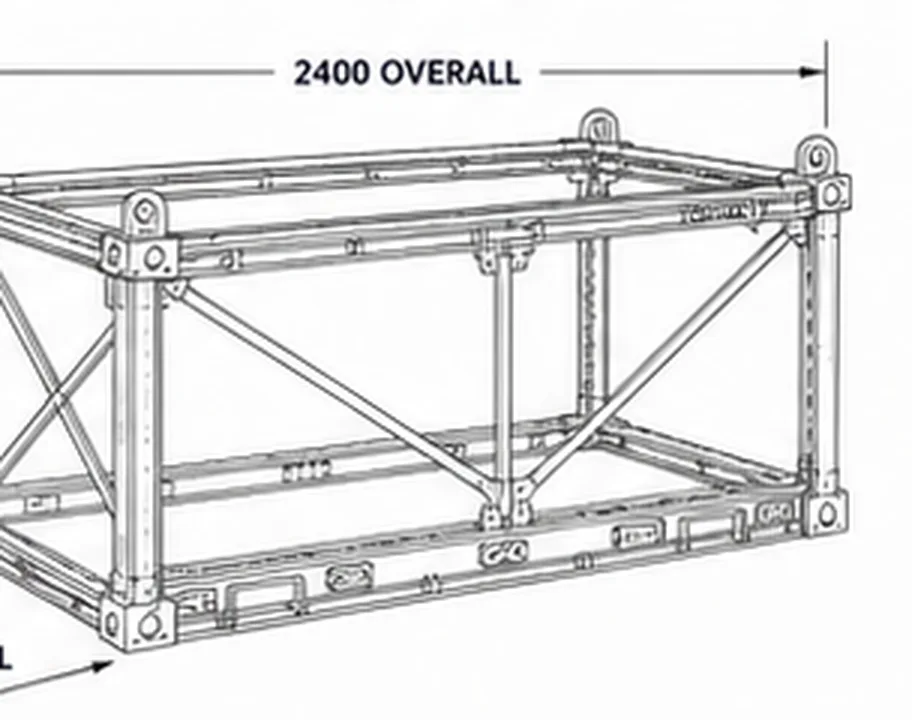
AssetBlock builds an industrial training ground from one standard steel block, the UB-2400.
A cartridge slides into the shell on internal rails and locks. The cartridge sets the scenario. The shell stays the same.
ISO 1161 corner fittings, cones and shear pins let the blocks align, lock, stack and travel as ordinary freight.
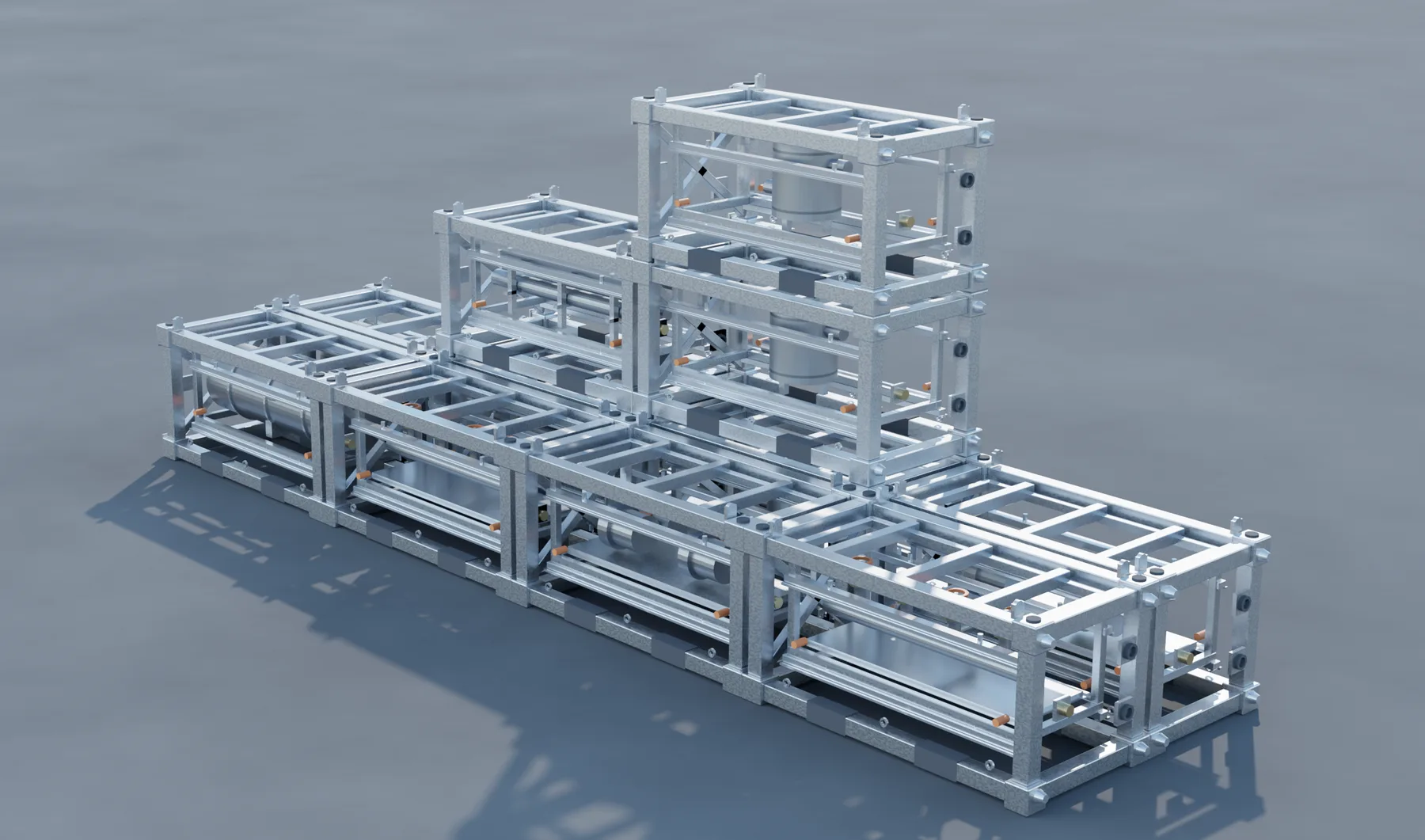
Eleven identical blocks form the Config A process plant. A new scenario is a new cartridge, not a new prop.
The system
Every AssetBlock training ground is built from one part. The shell never changes. The cartridge inside it sets the scenario. The layout of the blocks sets the asset.
Scenarios
Eight cartridge families slide into the same shell. Each one is modelled in 3D. The cartridge types used in the Config A process plant are detailed in its build drawing set.
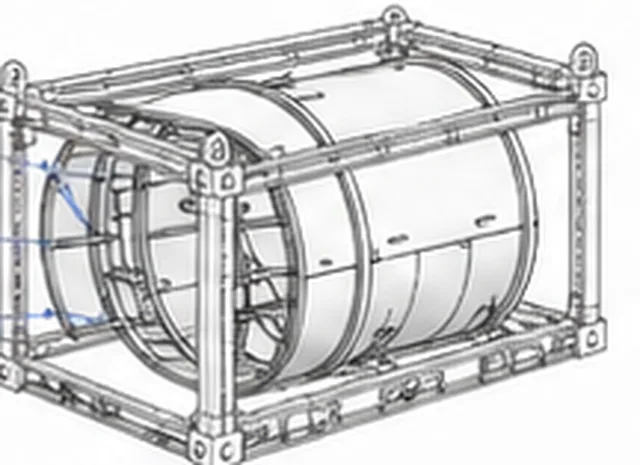
Storage tank wall and roof section. Tank, rim seal and bund scenarios.
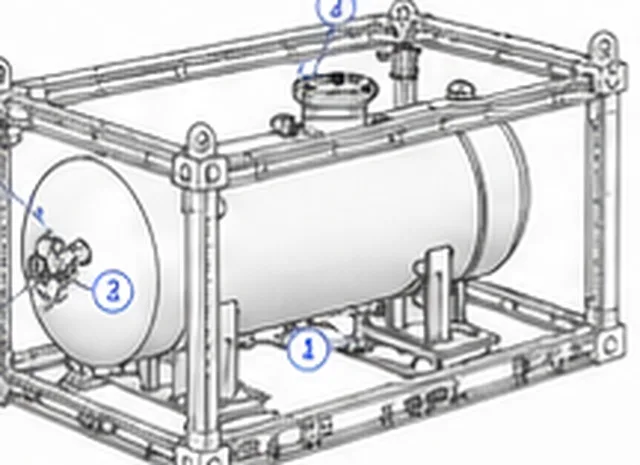
Column or vessel face with a manway. Vessel fire and confined-entry drills.
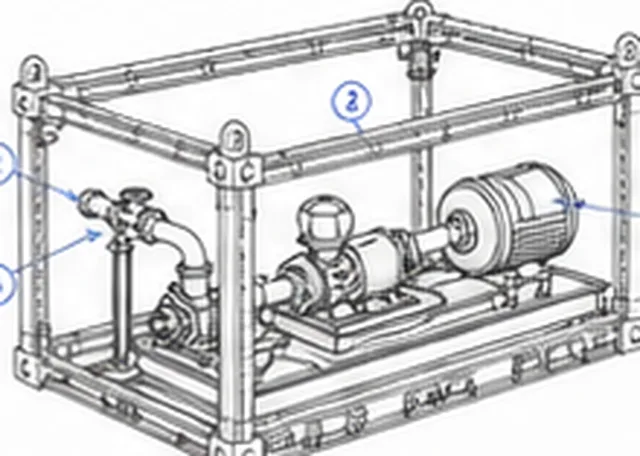
Pump and motor set. Seal, flange and pool fire scenarios.
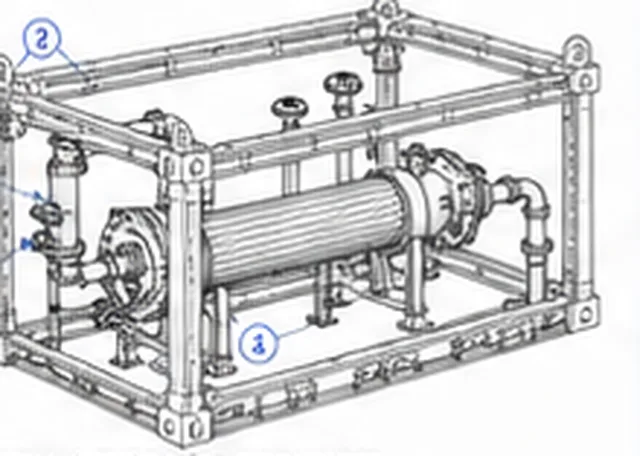
Shell-and-tube exchanger face. Process unit and flange scenarios.
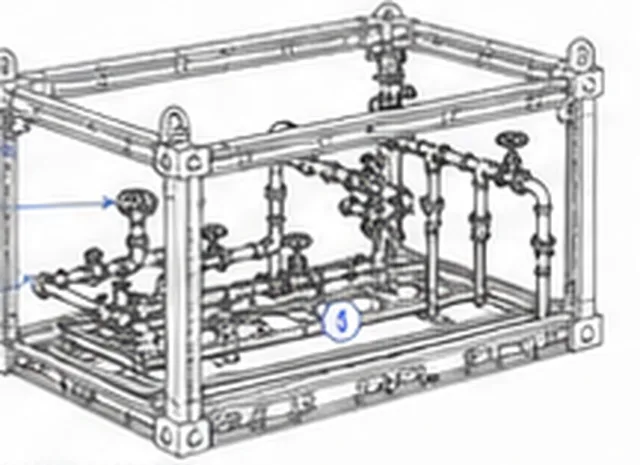
Valve cluster. Isolation, leak control and shut-down drills.
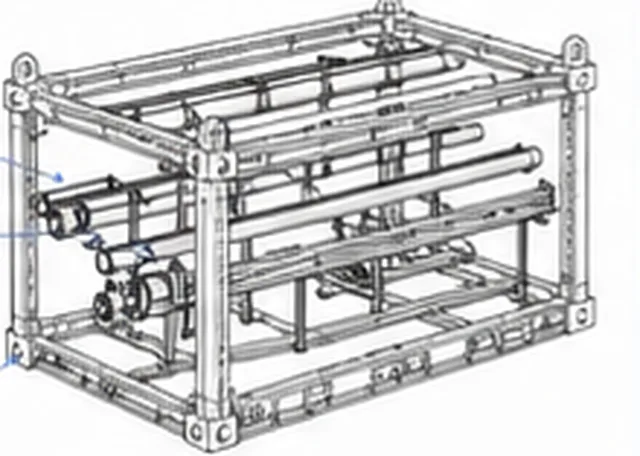
Pipe runs along or across the block. Rack and line scenarios.
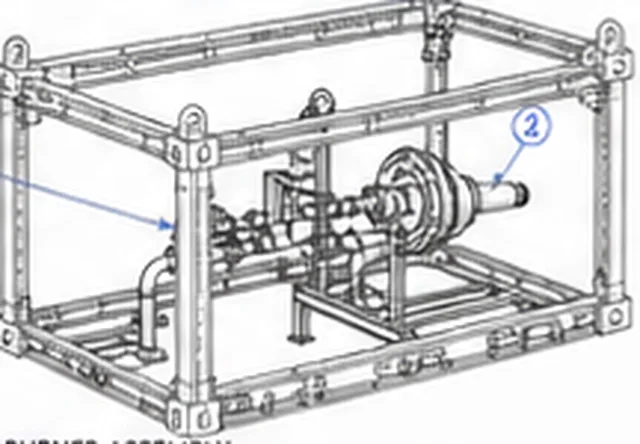
Carries the licensee's own certified live-fire system into the block.
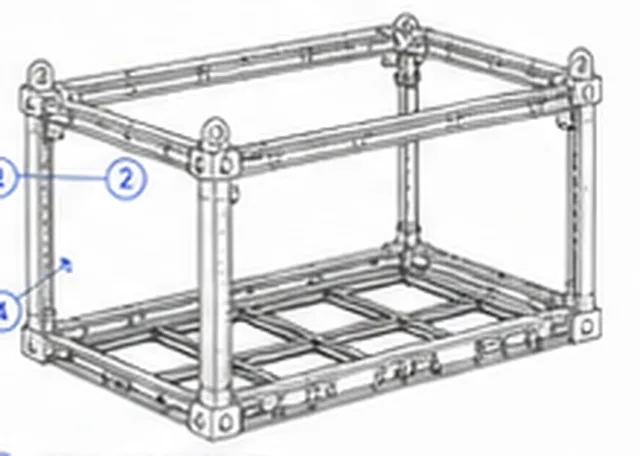
Clear bay for custom props, search and rescue, and site-specific builds.
Configurations
| Configuration | Drawing status | Training focus |
|---|---|---|
| Horizontal tank | Patent drawing | Horizontal tank fires, flange and shell cooling |
| Vertical tank | Patent drawing | Vertical vessel and tank wall scenarios |
| Pipe rack | Patent drawing | Elevated line fires and rack cooling |
| Pump skid | Patent drawing | Seal and flange fires at grade |
| Heat exchanger | Patent drawing | Process unit and flange scenarios |
| Valve manifold | Patent drawing | Isolation, leak control and shut-down drills |
| Modular process plant (Config A) | Full build package, 11 blocks | Unit fires, vessel, exchanger and pump scenarios |
| Tank farm | Patent drawing | Tank, rim seal and bund scenarios with foam and water |
| Vehicle and road tanker | Patent drawing | Transport incident and loading bay scenarios |
| Confined space | Patent drawing | Entry, search and rescue from vessels |
| Marine and offshore | Patent drawing | Deck, module and engine room scenarios |

For manufacturers
The design work is done. A licensee goes from drawings to a first build without a development programme.
Every block is the same block. Production runs are repeat runs, which keeps cost and quality steady.
Customers add cartridges and blocks as budgets allow. Each new scenario is a new order.
The gas-fire cartridge carries the licensee's own burners and controls. AssetBlock is the structure around them.
Blocks ship on standard trucks and set down by crane. Less civil work at the customer's site.
A training centre starts with one block and grows to a full plant on the same standard.
The valves a trainee operates are dummy valves. They have no connection to the gas. Live gas is controlled only at the external manifold, in an instructor zone with an emergency shut-off. Every hose and coupling is leak-tested before ignition. Each burn has an exclusion zone, a marked flame direction and a post-burn inspection. Fire service design, controls and certification follow the licensee's own systems, NFPA 1402, NFPA 1403 and the local authority.
Oil, gas and petrochemical fire brigades. Refinery, port, airport fuel-farm and utility response teams. Fire academies, colleges and military training centres. Municipal departments with industrial risk. Offshore and marine training providers.
For live-fire simulator manufacturers
AssetBlock is built to sit beside a proven simulator range, not to replace it. The licensee keeps its gas systems, controls and NFPA 1402 practice. AssetBlock adds an industrial line on top.
Structural towers, flashover units and outdoor props already cover municipal training. AssetBlock adds the process plant: vessels, exchangers, pumps, valve manifolds, pipe racks and tank farms.
Gas is fed from an external manifold with an emergency shut-off. The licensee's own propane or natural-gas train, PLC, flame monitoring and interlocks connect there. The fire technology stays the licensee's own.
The block, the cartridges and eleven configurations are already drawn. A new industrial prop becomes a repeat build. The licensee's engineer verifies the final sizing once.
ISO 1161 corner fittings, lifting lugs, forklift pockets and standard trucks. The same handling as container-based training buildings.
One shell takes any cartridge. One purchase covers many scenarios, and a scenario change is a cartridge swap.
Fixed blocks and cartridges give fixed part numbers and fixed prices. The line suits catalogue and cooperative-contract buying.
Every block follows the same inspection routine. Annual inspections, cartridge additions and upgrades repeat across every customer.
Ready to build
Patent applications filed. Priority date 8 August 2026.
Commercial
By field and by territory
The right to build and sell AssetBlock blocks and cartridges. Exclusive or non-exclusive, by agreement.
One training ground
The right to build one AssetBlock training ground for one owner, at one site.
Before any commitment
Drawings, specification and the Config A build package released for review under a signed mutual NCNDA.
This site and the visual overview PDF. Non-confidential.
Twenty minutes. The 3D model and the animations walked through on screen.
A short mutual non-circumvention and non-disclosure agreement, signed by both parties.
Drawings, specification and the Config A build package, released within two working days of signature.
One block plus two or three cartridges, built by the licensee, with a live demonstration.
Manufacturing or site licence, by field and territory.
Origin
AssetBlock was designed by a fire and rescue instructor with more than 25 years in emergency response instruction in Trinidad and Tobago and the United Arab Emirates, trained to NFPA and TEEX programmes. The design answers one problem seen on every industrial training ground: each new scenario needed a new prop.
Detail
A complete design package: 30 patent drawing sheets, a 56-page specification, a full build package for the 11-block Config A process plant, a fixture design package, a 3D model and 17 rendered films. No block has been built yet. The first physical block is the pilot, built with the first licensee. Final structural sizing is verified by the licensee's engineer.
Yes. Gas enters through an external manifold in an instructor zone, with a regulator, gauge, emergency shut-off and purge point. Certified hoses with locking quick couplings run to a burner on a mount plate and heat shield. The licensee's own fuel train, PLC and interlocks sit at the manifold. AssetBlock supplies the structure, the scenario and the layout.
The licensee builds and inspects each live-fire prop to NFPA 1402, as with its current props. Live-fire evolutions follow NFPA 1403 and the local authority having jurisdiction. The specification names the steel grade, fasteners and finish for the block.
Each block lifts on four top-corner lifting lugs or by forklift from either side. Blocks travel by standard road freight and set down on a prepared slab. Cones and receivers align the blocks, shear pins lock them, and bridge fittings join the ISO 1161 corner fittings.
Yes. Blocks rearrange into a new layout, and cartridges swap to change the scenario. The investment stays in use as training needs change.
Either. A manufacturing licence is granted by field and by territory, exclusive or non-exclusive, by agreement.
The designer is the sole owner of the AssetBlock design, the drawings and the patent applications, with full authority to license or assign them.
Patent pending. International application PCT/IB2026/058444 and a Swiss application were filed on 8 August 2026, the priority date. The design package is also protected as know-how and by copyright in the drawings.
Terms are set by field and territory, and are discussed on the video call. Full commercial terms are shared after the NCNDA is signed.
Yes. Assignment of the full rights is open for discussion alongside the licence options.
The Config A build package is ready for fabricator quotation. A pilot block and two or three cartridges can go to fabrication once the pilot scope is agreed and the licensee's engineer has verified the structural sizing.
A 20-minute video call walks through the 3D model and the animations. The mutual NCNDA opens the drawings, specification and build package.